History
Little Africa and Pedra do Sal
The history behind Pedra do Sal in Rio's port zone: Little Africa, the quilombo, the Valongo Wharf and the Bahian families who shaped early samba.
Book the Pedra do Sal evening ↗Quick answer
Little Africa, Pequena África in Portuguese, is the port-zone area of Rio de Janeiro around Gamboa, Saúde and Santo Cristo where Bahian and African-descended families settled. Pedra do Sal is described as its symbolic core. The nearby Valongo Wharf, a former landing place for enslaved Africans, was inscribed on UNESCO's World Heritage list in 2017.
A name for a neighbourhood
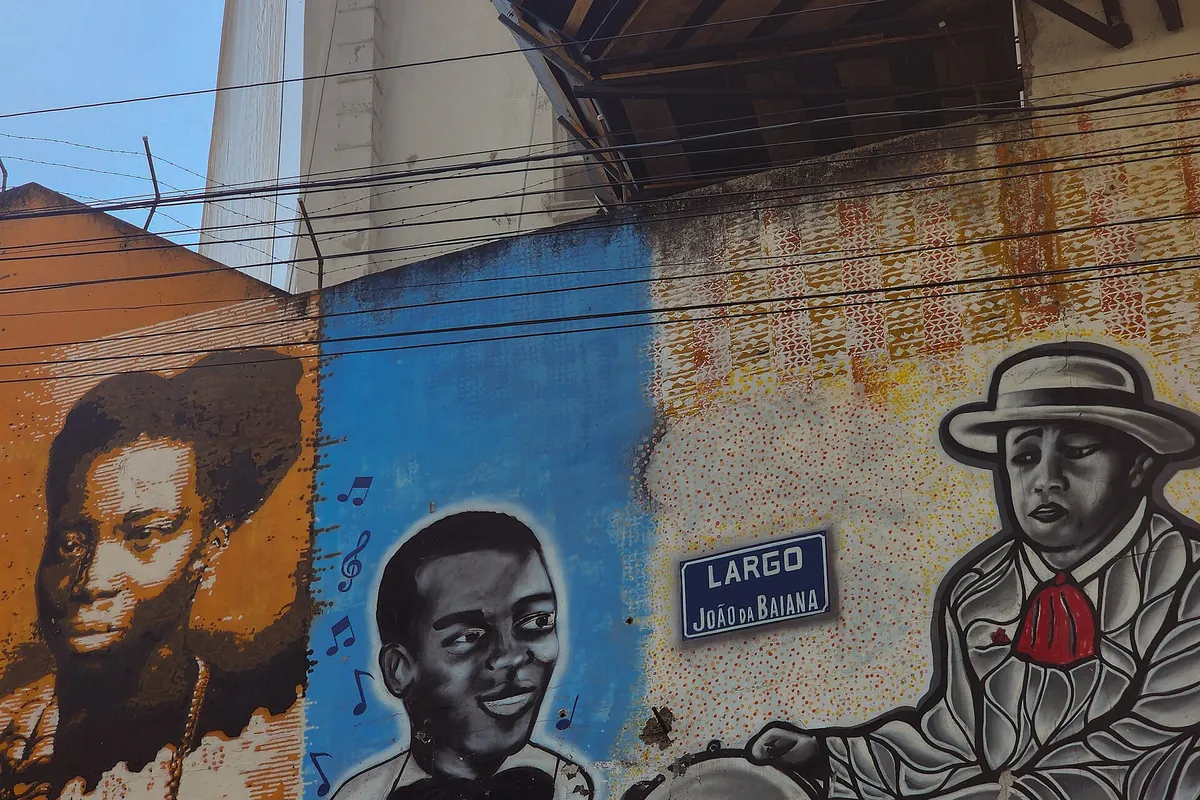
Portuguese Wikipedia says the name Pequena África was given by the samba composer Heitor dos Prazeres to a region of Rio's port zone. The area includes Gamboa, Saúde and Santo Cristo, and the quilombo community of Pedra do Sal. RioOnWatch describes Little Africa as an area in the Port Region of Rio de Janeiro. The name is a memory of who lived and worked there: Bahian migrants, freed people and their descendants, many of them employed around the port.
Salt, the rock and the work
Portuguese Wikipedia says salt arriving at the port was unloaded on the rock and distributed to nearby warehouses, and that the area was a place where dockworkers were hired. English Wikipedia adds that migrants from Bahia settled in Saúde, where prices were low and the port offered work, and that the site, then called Pedra da Prainha, had a large slave market. The name Pedra do Sal, Salt Stone, comes from the cargo that was carried across it.
A quilombo in the port
A quilombo is a community founded by, or descended from, people who escaped slavery or were freed. RioOnWatch reports that the community of Pedra do Sal was formally recognised as a quilombo in December 2005, and an association of the remaining quilombo community still lives there. RioOnWatch calls it the oldest continually inhabited Black neighbourhood in Rio. For a visitor, that means the rock is not only a stage for music. People live in the streets around it.
The heritage listing
INEPAC, the Rio state heritage institute, listed Pedra do Sal as a historic and religious monument in 1984, according to English Wikipedia, and Brazilian press repeats the 1984 date. UNESCO's World Heritage listing belongs to the nearby Valongo Wharf, inscribed in July 2017, and not to the rock itself. The two are often mentioned together because they are part of the same Little Africa story, and a guide may link them on the night.
The Valongo Wharf
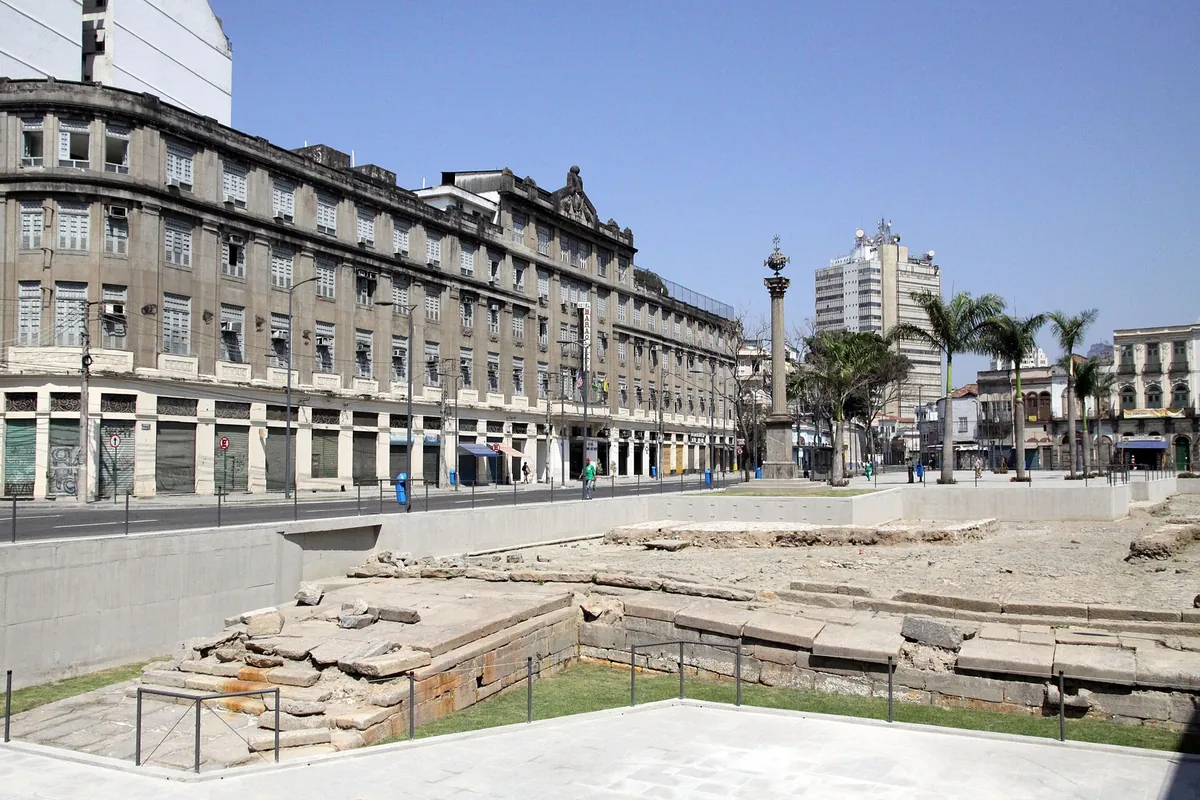
The Valongo Wharf was a landing and trading place for enslaved Africans, according to Wikipedia, and RioOnWatch calls it what was once Rio's most active slave market. The wharf was later built over and buried, and works connected with the port's redevelopment uncovered it again. Today the excavated stones sit in a sunken plaza in the port zone, and the site is on UNESCO's World Heritage list.
Houses, faith and music
Portuguese Wikipedia describes Pequena África as full of collective houses of freed people. Tia Ciata, a Bahian-born candomblé priestess, hosted musicians in her house, and English Wikipedia describes her home as a meeting place for religion, cuisine, dance and music. English Wikipedia also lists Donga, João da Baiana, Pixinguinha and Heitor dos Prazeres among the musicians who played at Pedra do Sal, and calls the area a centre of samba and choro music.
Read next: From Bahia to Rio: samba roots
Redevelopment and memory
RioOnWatch notes that the Porto Maravilha redevelopment project renewed parts of the port area, and that work in the area revealed the layers of the Valongo Wharf. The article also says the history of the area remains largely unknown despite the redevelopment. That is one reason a guided evening can be useful: it puts a local voice beside a history that written sources describe as little known.
The Valongo celebration
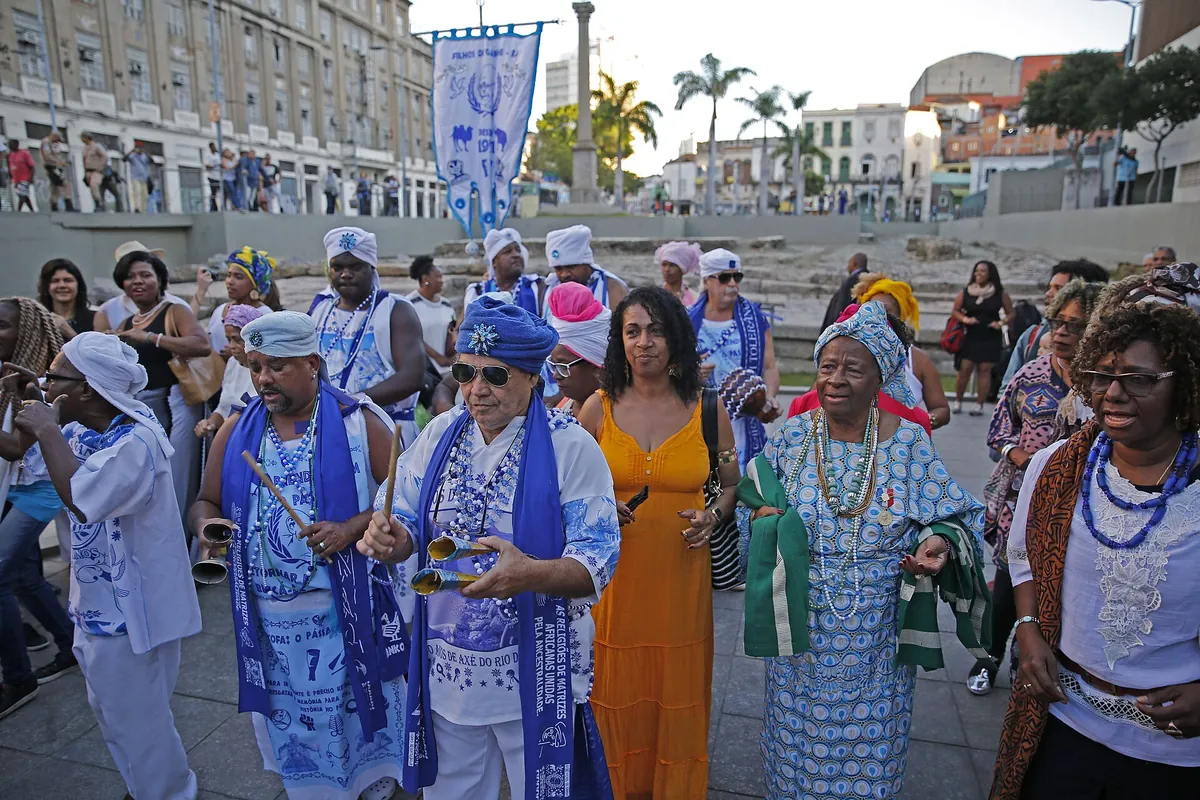
When UNESCO's decision on the Valongo Wharf was announced, a celebration was held at the site, and the Afoxé Filhos de Gandhi performed there. The photograph shows part of that event. It is a reminder that the story told around Pedra do Sal is still being told by the communities connected to it.
How the guided evening uses this history
The guided ticket promises the history of the place and of samba alongside the music, and it presents Pedra do Sal as part of Little Africa. A guide can point out the rock, the murals and the nearby streets, and tell the story of the salt and the quilombo. Treat what you hear as one telling among several, and read a source or two before you go.
Frequently asked questions
What does Pequena África mean?
It is Portuguese for Little Africa, the name of a port-zone area around Gamboa, Saúde and Santo Cristo.
Is Pedra do Sal a World Heritage site?
No. UNESCO inscribed the nearby Valongo Wharf in 2017. Pedra do Sal was listed by INEPAC in 1984.
Why is it called Pedra do Sal?
Salt arriving at the port was unloaded on the rock, which gave it the name Salt Stone.
Sources